
Is he that into you?
When asked by my gaggle of girl friends to have a 2-for-1 Orange-Wednesday trip to the cinema, I expected nothing more than a laid back rom-com that would pass a few hours at a discounted rate.
I could assume the overall gist of the rather predictably titled ‘he’s just not that into you’ and wasn’t anticipating anything other than a few funny one liners from easy-on-the-eye Hollywood A-listers. However, when we left the cinema at half ten on a below-tolerably freezing February evening, there seemed to be a lot more on my mind than the inevitable fact I had to be up again for work in less than six hours.
The film depicts a no-excuses truth to understanding men and whether you decide to agree with Greg Behrendt and Liz Tuccillo, who wrote the book on which the film is based, I think I am safe to say anyone with slight depth would be left feeling unsettled by the gender portrayal within relationships. The variety of interconnecting story arcs leave a person questioning their own status whether single, dating, long-term relationship and even married. As much as a status can outline your individual romantic situation it cannot control the other person’s feelings or actions and this may have induced the twisted feeling within my gut when leaving Leicester Square’s Empire Cinema.
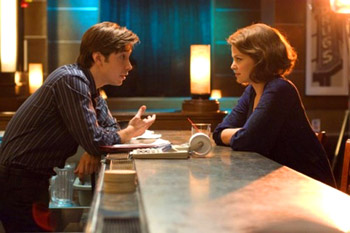 Beginning at the shallow-end of the dating pool I was initially introduced to the irritatingly insecure character Gigi, played by Ginnifer Goodwin. She embodies the needy aspects that women are stereotyped to portray yet something about this situation struck a cord with me. I can’t say it was her cringe-worthy phone call anticipation after just a couple of drinks with a man who left her with the flippantly used “I’ll call you”, as this is not the case for many modern 21st century women. Women leave men hoping for follow-up interest just as much as the male equivalent, it simply depends on the individuals involved. But why is there the imbalance that one person always has to wait on the other to give them the green light? Can you not just act on how you feel and call because you want to? Who makes these rules? It was the eye-opening comment from Justin Long’s character, Alex, which gave a simple explanation to how mankind deal with the rules of relationships and whether we make or break them, “You are either the exception or you are the rule”.
The exception being you get everything you want from your situation, you’re the girl that other girls envy. If you want to be carelessly dating, you are. If you want to hold down the perfect guy in a relationship, you can. If you want the guy you love to marry you and stick with you for life, he does. The rule, i.e. the common code of practice, is chasing the dream to receive a slap in the face and feeling of failure before picking yourself back up and attempting the next hurdle.
 Does this mean that men will never love us in the way we hope for unless we are the ‘exception’, or is it that we are too selfish to see that they may not want the same things as us even if they still love us? This is where I introduce the married couple Janine, Jennifer Connelly and her husband Ben, Bradley Cooper. While Janine demonstrates security through boasts to her work colleagues of a true soul mate in her husband, a chance encounter between Ben and a young musician, Scarlett Johansson, jeopardises this security for us as an audience when we see lust take control of Ben and a steamy affair occur. This only led me to wonder, even in the happiest of relationships, how can we prevent destructive occasions from arising? The answer can only lie in hope and trust. This trust is the previously mentioned pain in my gut, as this is something we could never control.
Further questions provoked by this ‘feel-good film’ led me to the query that are women too quick to define love and relationships to the way we want and not bear in mind the actual feelings of our other halves? Director Ken Kwapis carefully uses Jennifer Aniston’s character Beth, who has been in a relationship with her partner Neil, Ben Affleck, for seven years to portray that you can have it all and sometimes just not see past your own nose. We see her question whether to end her relationship with the man she wants to marry merely because he does not believe in marriage, that it’s solely a piece of paper which doesn’t change his ultimate commitment to her. The most devoted man within the whole plot is dumped by Beth as she sees no future without putting their love on the books. It’s only when disaster strikes and Neil surfaces when she needs him most that Beth can see her blinkered views on life were hindering a perfectly fine relationship. Why then I question, do we make these rules for our love-lives if often they lead to the breakup of something good?

The film could be perceived as an inaccurate portrayal of a male ineptitude to emotional feelings that is not necessarily the case, inexorably provoking further interrogation to what men really do think. Something I doubt we will ever have a clear-cut answer to. So are you the exception or are you the rule? Or dare you not think about it and just be. I think the safest way to not manipulate your own fate is to follow the latter and let life live out your fate for you.
 Whose Boots Are Those Shoes?